


Dental Implant Treatment
What is a Dental Implant?
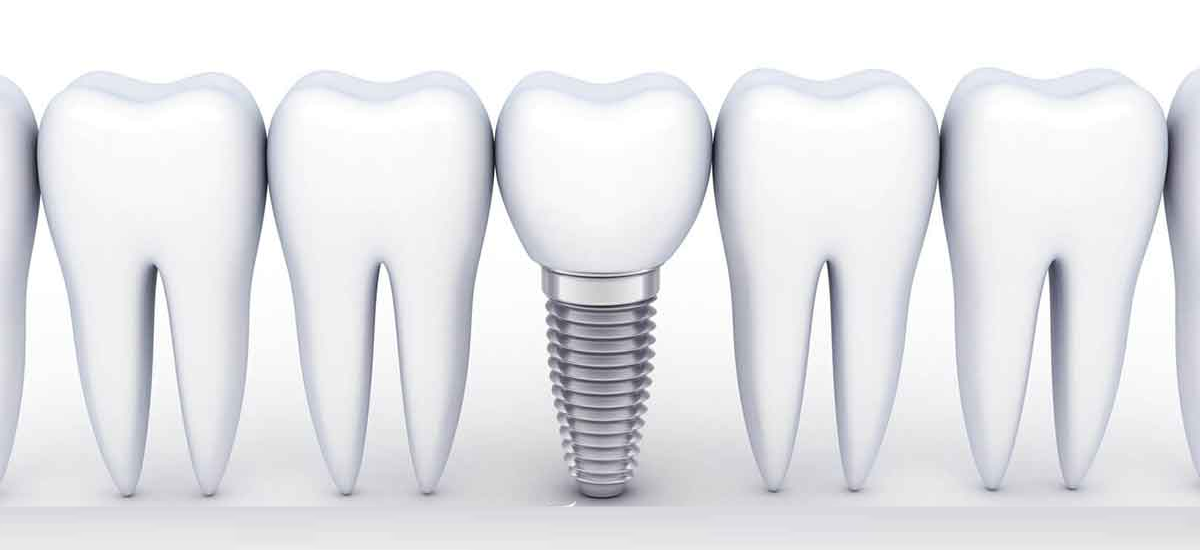
In modern dentistry, dental implants are the most preferred treatment method for the elimination of missing teeth. Dental implants are titanium screws that are placed in place of teeth lost for any reason and function as roots, providing retention and support for fixed and removable prostheses. In all cases ranging from a single tooth loss to multiple tooth losses and complete toothlessness, the most similar results to natural teeth are obtained with dental implant treatments in improving the functional, aesthetic, phonetic and psychological status of patients.
Is dental implant surgery a painful procedure?
The placement of dental implants into the jawbone is usually performed under local anesthesia and painlessly. A healthy adult can easily tolerate the surgical procedure and the post-operative period.
What are the effects after dental implant surgery?
After dental implant surgery, temporary pain, swelling, redness and bruising may be seen around the cheeks and lips. Symptoms disappear with the healing of the intraoral surgical site.
How long do dental implants last?
Correct planning and prosthesis design and good oral hygiene are the most important factors in the long-term success of dental implants.
What is a Dental Implant?
In modern dentistry, dental implants are the most preferred treatment method for eliminating tooth deficiencies. Dental implants are titanium screws that are placed in place of teeth lost for any reason and function as roots, providing retention and support for fixed and removable prostheses. In all cases ranging from a single tooth loss to multiple tooth losses and complete toothlessness, the closest results to natural teeth are obtained with dental implant treatments in improving the functional, aesthetic, phonetic and psychological conditions of patients.
Who can have dental implants applied to?
Malocclusion is generally called malocclusion. Malocclusions can be genetic or acquired. Genetic problems include crooked teeth, gaps between teeth, congenitally missing or extra teeth, jaw teeth and facial incompatibilities. Acquired problems are problems related to thumb sucking, airway narrowing due to tonsils and adenoids, and premature loss of teeth. All these problems not only disrupt the alignment of the teeth, but also affect facial development and appearance.
Do dental implants cause allergies?
Dental implants are made of biocompatible titanium. Titanium-containing materials have been used in medicine, especially in the fields of orthopedics and plastic surgery, for many years. Although very, very rare, some people may be allergic to titanium. At this point, possible risks can be minimized by questioning patients' allergies to other substances, drugs or metals with detailed examinations by physicians.
What is bone graft (bone powder)?
Bone grafts, also known as bone powder, are produced in different ways. Graft materials, which can be produced as human-derived, animal-derived or synthetic, are prepared in particle or block form. Graft materials are used in cases where the existing bone structure is not sufficient for dental implant placement, in surgeries where tooth extraction and implant procedure are performed simultaneously, in maxillary sinus floor elevation procedures before implant surgery, in cases where bone resorption, pathology and defects resulting from previous surgical procedures, and in cases where the bone structure in the region needs to be supported during tooth extraction. Bone grafts are used to increase bone formation and volume in the applied areas, acting as a roof.
How is the number of dental implants decided?
When deciding on the number of implants to be applied in the treatment, the extent of the existing edentulism, the patient's anatomical features, the planned prosthetic treatment and biomechanical conditions are taken into consideration. The number of implants that will support removable and fixed prosthetic applications may therefore vary for each patient.
What is the All-on-4 system?
All-on-4 is a treatment method that involves replacing all missing teeth in a jaw using 4 implants. It is applied to patients with insufficient bone volume in the back areas of the jaws and in some special cases. With this treatment procedure, patients can have their prosthetics made on the same day.