


Orthodontics
Digital Orthodontics
Digital dentistry is also used in the field of orthodontics.
Taking Measurements and Modeling
Before orthodontic treatment, plaster models of the lower and upper jaws of our patients were made for both archival purposes and to create a treatment plan. With digital dentistry, these models are now obtained in a virtual environment with 3D scanning. Since large metal spoons are not used, it is especially preferred by people with a gag reflex.
Treatments Performed with Invisalign or Clear Plates
Invisalign treatment; orthodontic treatments performed without the use of braces are literally a product of digital dentistry. The measurements of the jaws taken with digital scanning can be delivered to laboratories abroad. Invisalign treatment planning is done entirely through a digital system, and clear plates are obtained from models created with 3D printers. In this way, access to both domestic and foreign laboratories is possible.
Wire-Free Orthodontics (Invisalign)
Treatment of Crooked Teeth with Clear Plates, Wire-Free Teeth Correction (Orthodontics) Treatment
What is Invisalign Treatment?
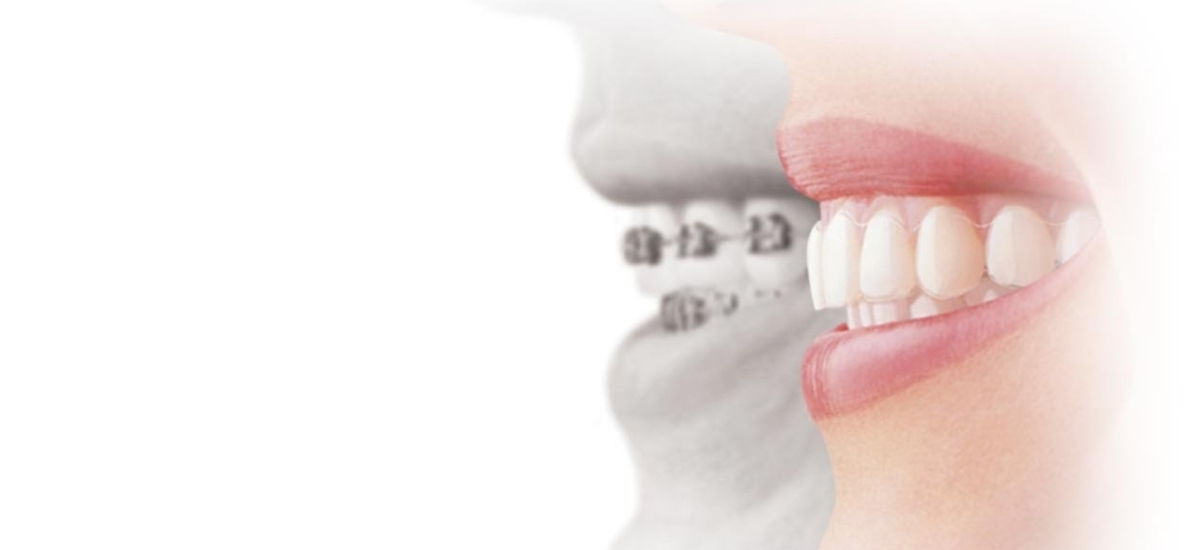
Invisalign treatment; It is a digital orthodontic treatment technology that is applied to correct teeth with transparent aligners. The reason why wire-free orthodontic treatment (invisalign) is preferred is that it allows the treatment of crooked teeth with transparent aligners without using braces.
What are the Features of Invisalign Treatment?
- It does not affect your daily life and is a treatment for crooked teeth without the use of braces.
- Thanks to the use of transparent plates, it is not visible in the mouth.
- Clear aligners can be removed while eating or drinking.
- On special occasions (weddings, graduations, business meetings, etc.), you can remove your aligners and take a break from treatment for a few hours.
- Invisalign (clear aligner treatment) is applied to both teenagers and adults.
- There is no use of metal, brackets or wires.
- Provides preliminary information about treatment results through intraoral scanners.
How Do Teeth Move Without Braces?
- Invisalign plates are mass-produced according to the desired position in which the teeth are moved.
- Each plate creates 0.05 mm of movement.
- The plates are worn for 15 days and then the next plate is changed.
Early Orthodontics
The importance of timing is particularly evident at early ages when there are jaw discrepancies, skeletal expansion can be applied in maxillary narrowness, modifications can be made to ensure spontaneous eruption of impacted teeth and growth and development can be directed. Correct breathing, correct jaw closure and healthy emerging teeth in children are the main components of a beautiful and healthy smile. Treatment of functional and aesthetic discrepancies originating from genetic background at early ages can be faster and easier. Diagnosis, evaluation and treatment planning of these discrepancies are within the fields of orthodontics.
Skeletal Anomalies and Orthognathic Surgery
Depending on environmental factors such as genetics or trauma, the lower jaw and/or upper jaw may be incompatible with the facial structures or with each other in various combinations. In addition to causing aesthetic problems, having one of the jaws set back can also lead to sleep apnea known as OSA. Similarly, jaw asymmetries can cause jaw closure problems and jaw joint problems. Orthodontists perform the diagnosis, analysis and treatment planning of skeletal discrepancies. Growth modifications can be applied at an early age, but orthognathic surgery requires waiting for the jaw and facial structures to complete their growth and development .
Adult Orthodontics
The starting point for establishing the aesthetic infrastructure of the face and smile, correct chewing function and healthy jaw joint relationship is orthodontics. Thanks to digital diagnosis, analysis and planning methods, clearer and more predictable treatments than ever before are applied to adults with many current treatment alternatives that eliminate aesthetic concerns. With tooth-colored ceramic brackets, lingual brackets applied to the back surface of the teeth or transparent plates, all levels of treatment can be applied at all ages.